

Sleep Basics: Stages, Cycles, and Architecture
An overview of how sleep stages and cycles fit together across the night, why the pattern changes over time, and why that structure matters for recovery and health.
The Blueprint of a Night
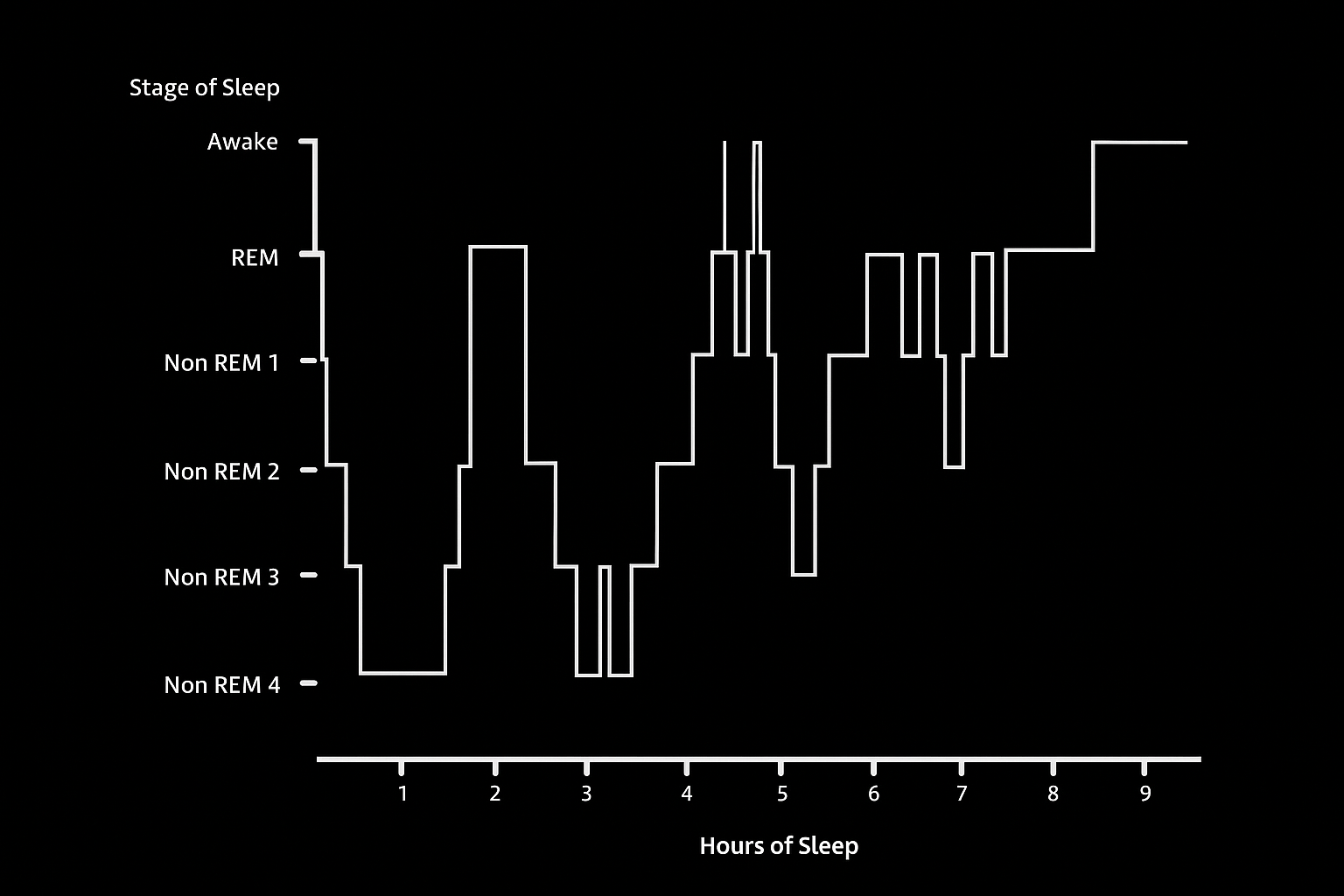
Sleep is not one long uniform state. Your brain moves through repeating patterns of lighter sleep, deeper sleep, and REM (rapid eye movement) sleep in a predictable order. That pattern is your sleep architecture.
Stages: N1, N2, N3, and REM
N1 is the light drift-in stage, often just a few minutes. N2 is still light but more stable; your body temperature drops and brain waves show sleep spindles. N3 is deep (slow-wave) sleep: hard to wake from, crucial for physical recovery and immune support. REM sleep features vivid dreaming, fast eye movements, and high brain activity while your muscles are largely offline. Each stage serves different maintenance jobs for body and brain. (N3 and N4 are often combined into N3 in terminology.)
Cycles: About 90 Minutes, Give or Take
A typical adult completes four to six cycles per night. Each cycle runs roughly 80 to 110 minutes. Early cycles are rich in N3 deep sleep. Later cycles trade some deep sleep for longer REM periods. That shifting balance is normal and healthy.
Architecture Changes Across the Night and Across Life
Children get more deep sleep. Older adults often see lighter, more fragmented sleep and less N3. Stress, alcohol, caffeine, pain, or irregular schedules can slice up cycles or push stages around. Consistent bed and wake times help preserve a strong pattern.
Dreams
Dreams mostly happen during REM sleep, the stage when your brain is highly active and your body is relaxed. While scientists are still learning exactly why we dream, it’s clear that dreaming is a normal part of healthy sleep. Dreams may help process emotions, memories, and problem-solving, and are one sign that your sleep cycles are working as they should.


Why Knowing This Helps
When you cut sleep short, you are not just losing minutes. You are likely cutting off the last cycles that hold much of your REM. Fragmented nights can reduce deep sleep quality. Understanding the pattern makes it clear why a full, consolidated night matters for recovery, mood, learning, and overall health.
Dive Deeper: The 90 Minute Rhythm
Curious about that repeating loop and how variable it really is? Read more here.
Sleep Cycles: 90 Minutes, Give or Take
What Counts as Good Sleep Quality?
Quality is more than hours. Learn what a well-structured night looks like and how to spot problems.
What "Good Sleep Quality" Actually Means
Next up
Deep sleep repairs the body, REM supports the mind. How do they differ and why do you need both?
In this section
Articles in Sleep Basics: Stages, Cycles, and Architecture


REM vs. Deep Sleep: What's the Difference?
A practical comparison of REM and deep sleep, what each stage does, when each shows up, and why a healthy night depends on both.
3 min read
Read article

Sleep Cycles: 90 Minutes, Give or Take
A practical explanation of what a sleep cycle includes, why 90 minutes is only a rough guide, and how cycle timing changes through the night.
2 min read
Read article

How to Nap Without Ruining Your Sleep
A practical guide to nap timing, length, and recovery use so daytime sleep supports alertness without interfering with nighttime rest.
2 min read
Read article

Sleep Fragmentation: Why You Wake Up at Night
An introduction to what fragmented sleep is, what commonly causes it, and the main environment, timing, and medical factors that can break sleep apart.
4 min read
Read article

Chronotypes 101: Larks, Owls, and In-Between
A high-level guide to chronotypes, what shapes them, and why working with your natural timing affects sleep, energy, and performance.
2 min read
Read article

What Is a Circadian Rhythm?
A practical introduction to your body clock, how light and daily timing set it, and why circadian rhythm shapes when sleep feels natural.
6 min read
Read article
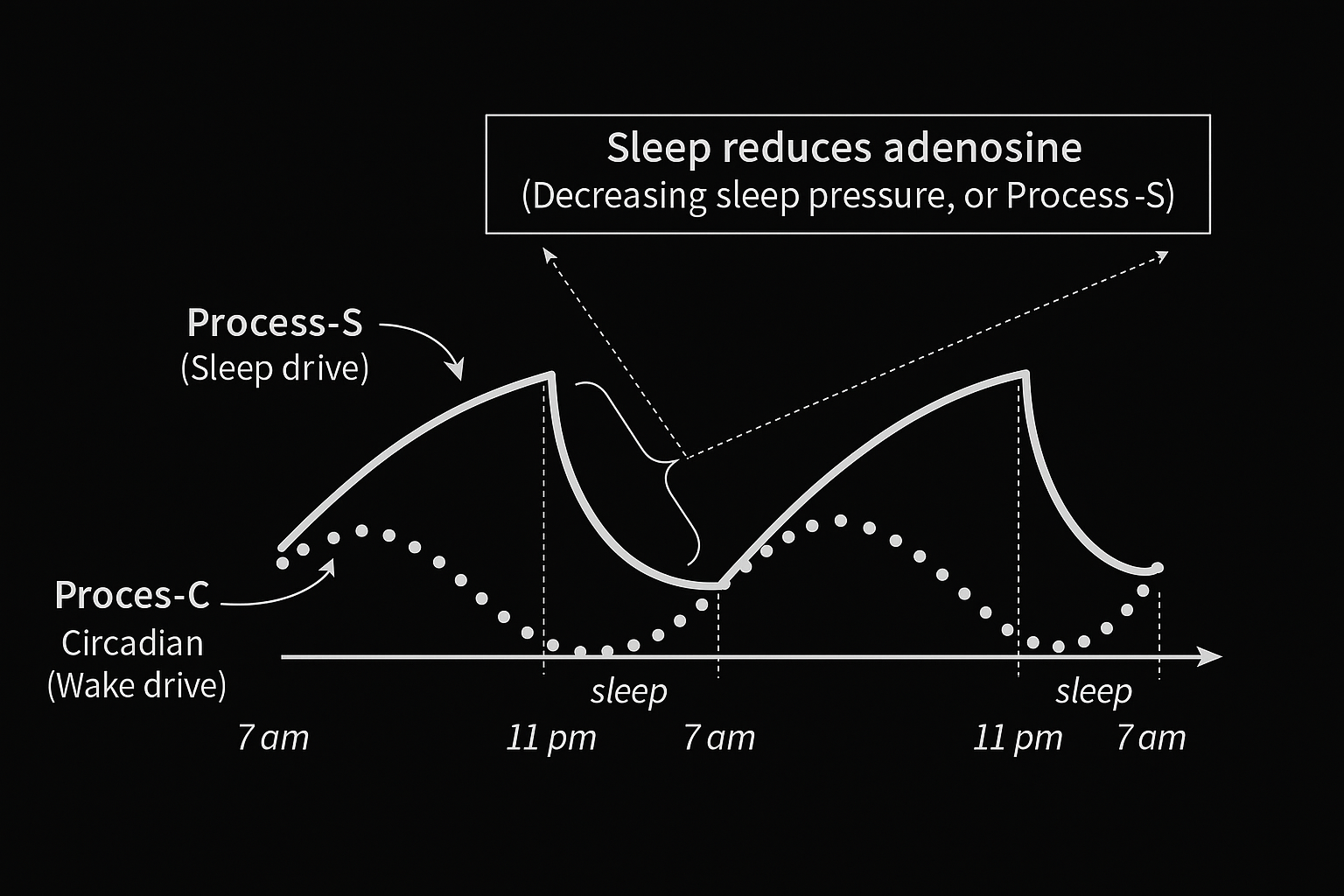
Sleep Pressure and Adenosine: The Build-Up to Bed
A high-level explanation of how sleep pressure builds, the role adenosine plays, and how caffeine, naps, and daily activity affect the drive to sleep.
4 min read
Read article

How Alcohol, Caffeine, and Late Meals Shift Stages
An overview of how common evening inputs change sleep timing and architecture, including their effects on REM, deep sleep, continuity, and recovery.
4 min read
Read article

The Role of Temperature in Sleep Architecture
A practical overview of how body temperature and bedroom climate influence sleep onset, stage stability, and the quality of sleep across the night.
3 min read
Read article

What "Good Sleep Quality" Actually Means
An introduction to what sleep quality really measures, the main signs of restorative sleep, and the habits and warning signs that shape how refreshed you feel.
2 min read
Read article