

Sleep Cycles: 90 Minutes, Give or Take
A practical explanation of what a sleep cycle includes, why 90 minutes is only a rough guide, and how cycle timing changes through the night.


The 90-minute idea (and why it is only a guideline)
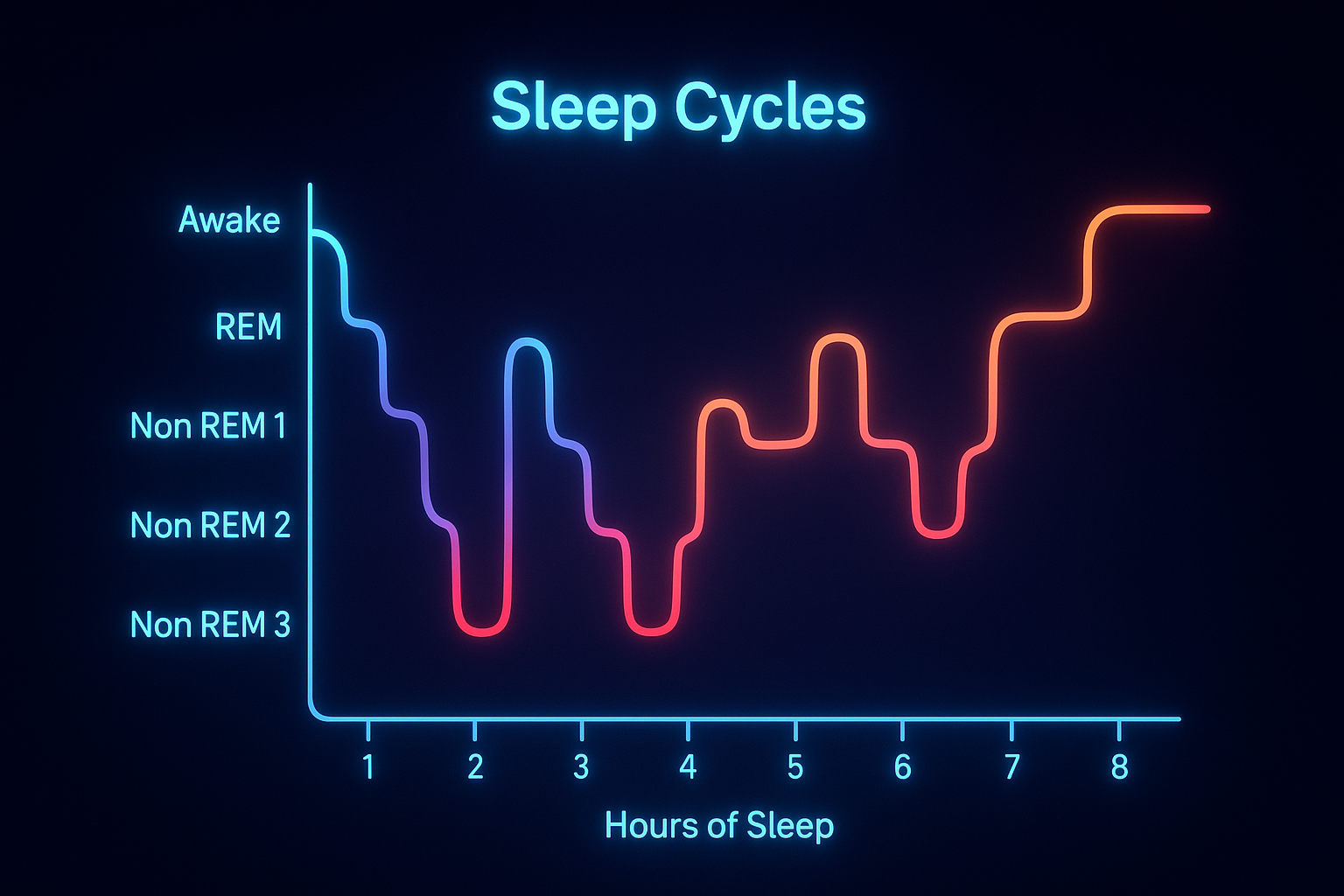
A typical sleep cycle lasts about 90 minutes, but real numbers range roughly 70 to 110. Your brain moves through lighter non-REM, deeper slow-wave sleep, and REM before starting over. The average lands near 90, so it is a handy shorthand, not a biological law.
What actually happens in one cycle
Stage N1 eases you in, N2 stabilizes you with sleep spindles and K-complexes, N3 (deep sleep) does the heavy physical and immune repair, then REM supports emotional processing and memory integration. One loop through these stages is a cycle.
Cycles change across the night
Early cycles are rich in deep N3 sleep. Later cycles trade some of that depth for longer REM blocks. This shifting pattern is why cutting the last hour or two of sleep often slashes your REM quota, and why a short night rarely feels emotionally sharp the next day.
How many cycles do you need?
Most adults feel best with 4 to 6 full cycles, which equals about 6 to 9 hours. Genetics, age, illness, and training load all tug this number up or down. Aim for a consistent total sleep window that reliably lets you finish enough cycles rather than chasing an exact count.
Should you plan wake times at cycle edges?
Waking near the end of a cycle can feel easier because you are more likely in lighter sleep. Apps and alarms try to guess this, but they are imperfect. Prioritize regular bed and wake times first. Use cycle math (multiples of 90 minutes) only as a light-touch tool, not a source of stress.
When cycles get chopped up
Fragmentation from caffeine too late, alcohol, pain, a snoring partner, or bright screens near bedtime can reset or interrupt cycles. You still log minutes in bed, but the brain keeps restarting deeper stages and never settles into its natural rhythm.
Quick takeaways
Think in complete nights, not single cycles. Protect the first half of the night for deep sleep by dimming evening light and avoiding heavy meals or alcohol. Guard the last half for REM by giving yourself enough total time in bed. Consistency beats clever hacks.
Related reading
Want a refresher on how these stages fit together across a whole night? Start with the overview.
Sleep Basics: Stages, Cycles, and Architecture
Curious about what makes REM different from deep sleep and why both matter? Dive into the next article below.
REM vs. Deep Sleep: What’s the Difference?
Next up
The next article explains how to use naps for recovery and alertness without interfering with your main sleep. Learn timing, length, and strategies for napping.